Breaking Through the Block!

fuerzabruta

Writer’s block. Ever been there? You find yourself staring at a blank screen or paper wondering where to start. So you begin to spelunk the caverns of the mind hoping to come across some nugget that will lead to greater gold, but to no avail as you’re left groping in the dark. I’m sure we’ve all been there at one time or another, whether it related to writing a term paper for school or trying to put words on a note that would comfort or encourage a loved one who was struggling. Or maybe it came when trying to write that first blog post of the New Year…

Obviously that’s where I currently find myself. Having begun this blog a few months ago, I had resolved to keep the momentum going in 2016. My initial goal was to post immediately in the New Year, but we were traveling so clearly that plan was thwarted. I told myself I’d begin once we got home, but as we all know it’s nearly impossible to think creatively when readjusting from a jarring 2-hour time change. Then the responsibilities of real life set in, and once again that New Year’s resolution got pushed to the back burner. So here it is, almost midway through January, and I decided enough with the excuses…it’s time to write! But what about? This morning I came across this quotation by author Charles Bukowski: “Writing about a writer’s block is better than not writing at all.” That seems logical, so I’ve decided to just start writing.

As I come up against this block, which has caused me to stumble out of the gates with regard to one of my New Year’s resolutions, I wonder what “blocks” you are facing in this New Year? Obviously one of the most popular New Year’s resolutions is to get in shape. I recently read that gyms move in extra equipment on January 1, only to move it back out on January 2. Now whether or not that’s true, it speaks to the fact that we often begin the year with such great intentions for self-betterment, but then the excuses begin or the demands of real life set in and we throw in the towel. So how can we reverse that trend in 2016?

Whatever “block” you’re facing in this New Year, I believe the quotation above applies. You’ve got to just start! When it comes to starting something new, I’ve found in my life that the most difficult step is the first. The reason for this is because that first step signifies the transition from the known to the unknown. From the comfortable to the potentially uncomfortable. From what’s safe to what’s risky. But what I’ve learned is that if we’re willing to take that first step, it’s amazing how often the steps that follow become easier. I recently experienced this when engaging in a 30-day detox (which I blogged about). The prospect of engaging in such an endeavor seemed so daunting, yet once I began not only did I immediately recognize the positive results, but it also became apparent that it wasn’t nearly as difficult as I thought it would be. I’ve become convinced that this doesn’t just apply to getting healthy physically, but to any endeavor which requires that we take that daunting first step.

Thinking about this in relation to my faith, as a life-long Christian you’d think that by now I’d be accustomed to taking these first steps given that Jesus repeatedly calls us to step out of our comfort zones for the sake of His Kingdom. Yet too often I shy away when faced with the prospect of stepping into something new. Perhaps you can relate. The beauty of a New Year, however, is that it gives us the opportunity for a fresh start. But there’s nothing more frustrating than having those great intentions crumble under the weight of fear and timidity. As I ruminate on that, my mind is drawn to this scripture: “For God has not given us a spirit of fear and timidity, but of power, love and self-discipline” (2 Timothy 1:7).When it comes to being successful with our New Year’s resolutions, what better words of encouragement than that?!

What if this year we made a different kind of resolution. Rather than resolving to achieve specific goals like weight loss, financial freedom, etc., what if we simply resolved to make 2016 the year of first steps. Obviously doing so would encompass all of those specific goals, yet perhaps this would actually make them more achievable. I’d argue that one of the reasons we often fail to achieve our New Year’s resolutions is because we’ve fixed our eyes on the last step instead of the first. Our goal weight. Our dream job. Our ideal relationship. We want that guarantee of the end result without being willing to take the incremental steps toward achieving it. So when that first step proves to be difficult, painful or uncomfortable, we immediately step back into our safe space. Let’s learn a lesson here from toddlers. We celebrate like crazy when they take their first steps, even though one of their next steps will undoubtedly lead to them falling flat on their face. We too may fall flat on our face in this New Year, but when the year comes to an end we’ll have much to celebrate if we were at least willing to engage in the risky discipline of taking those first steps.

So even if you’ve already thrown in the towel on your New Year’s resolutions, there’s no rule that says you can’t have a restart. Rather than giving up because you’re almost to mid-January and have yet to achieve your goal, be content with taking even just that first step. And then when the fear and timidity show up, which they will, remember that those are not from God, and that you’ve been given a spirit of power, love and self-discipline. With that as our motivation, let’s step into this New Year ready to break through some blocks!


 

Wrong place, right reason

Have you ever found yourself in the “wrong place?” A place which initially seemed so right, but ultimately proved otherwise.

The wrong job. The wrong relationship. The wrong (fill in the blank)…

When we find ourselves in this “wrong place” we tend to want to get out as quickly as we can. But often times we’re unable to do so, whether because of fear, financial responsibilities, etc. So we may remain in that “wrong place,” all the while wishing for the “right place” to come along.

Now there definitely are some “wrong places” that you need to get out of right now! It’s not worth staying in any place that has become toxic, as doing so will only bring you further harm. So if you currently find yourself in such a place with no assurance of positive change coming, then stop reading now and begin making plans to get out! While those extreme situations obviously exist, more often the “wrong place” may present an incredible opportunity for learning and growth during a particular season of your life.

In that case, you may be in the “wrong place” for the right reason!

I believe that for any person such experiences have the potential for tremendous growth. But for people of faith like myself, we should view such experiences as being used by God to prepare us for His ultimate calling/purpose for our lives. I realize that’s easier said than done when we find ourselves in a place that feels so wrong, but I’ve come to believe that it’s absolutely true. I don’t know about you, but I tend to make excuses for God when I find myself in the “wrong place.” I say things like, “Obviously God didn’t bring me here…He wouldn’t do something like that.” Now yes, there are definitely times when we chart off on our own, totally apart from God’s intention for us, and find ourselves in bad situations. (The good news is that God won’t just abandon us there, and He can work good out of even our biggest blunders.) But ya know, the more I think about it, perhaps we shouldn’t be making excuses for God when we find ourselves in what we perceive to be the “wrong place.” Perhaps that’s exactly where God intends us to be.

But why would God want to lead us into these “wrong places?” Well maybe because what we perceive to be the “wrong place” is actually the right place in God’s plan for us. Maybe, just maybe, God actually intends for us to grow. Rather than being content with leaving us stagnant, He knows the best place for growth is often in those places where we’re challenged, stretched, etc. Now again, let me be clear that I’m not suggesting that God delights in leading us into toxic situations. In fact, I believe that more often than not when we find ourselves in toxic situations it’s the result of our own decisions rather than God’s leading. What I am trying to challenge here is the idea that God will only lead us into cushy situations, and that if we find ourselves in challenging situations then God couldn’t possibly have had any part in that. The Bible clearly doesn’t support that view, as prophets, apostles, heck even Jesus, were led by God into incredibly challenging and difficult situations for His glory.

IMG_9729

Jesus didn’t just meander into the wilderness where He happened up the devil. Rather He was driven by the Spirit into the wilderness for the purpose of being tempted by Satan. Jesus was driven by God into what we’d probably all identify as being the “wrong place” for the specific purpose of being prepared for His earthly ministry. Jesus was absolutely in the “wrong place” for the right reason. If the Father chose this method for preparing His Beloved Son for His ultimate purpose, what makes us think that He’s changed His M.O. so drastically with us today?

I’ve already said that God does this for His own glory, which I believe to be absolutely true and of the utmost importance. But, lest we believe that God is some self-serving deity with no regard for humanity, if we’re honest I think we’d have to admit that it’s in those challenging times in our lives that we grow the most. I can attest to this in my own life as I’ve found myself in the “wrong place” twice over the past couple of years. One of those was the right position but the wrong place; the other was the right place but the wrong position. In both cases I experienced tremendous frustration as to why things didn’t work out how I had hoped when they initially seemed so right. As I’ve said in a previous post, hindsight is 20/15, so I now realize that I was in those “wrong places” for the absolute right reason. God has used those experiences and the challenges/frustrations they presented to mold me into the man I am today, and for that I’m grateful. Could God have spared me those tough experiences by simply directing me to the “right place” in the first place? Sure, He could have done that. But since God knows our hearts He also knows precisely what it’ll take to get through to us. While the “right places” in life may be the most appealing to us, it’s in the “wrong places” that we often learn the most about ourselves and thus have the greatest potential for growth. Given that fact, we should be thankful that at times we find ourselves in the “wrong place,” as long as it’s only for a season.

So if today you find yourself in a place that seems so wrong even though you’re sure it’s where God led you, take comfort in knowing that it’s not without purpose. Since Jesus Himself has been where you’re at, you’d better believe He’s going to help you get through this. Although it’s so hard to see it now, I’m confident that one day you’ll realize that this “wrong place” was absolutely for the right reason.

When we struggle to be thankful

IMG_9096

This is the day when we’re supposed to pause and give thanks for all the blessings in our lives. But what if you find yourself in a place where you’re struggling somewhat to be thankful?

For those of us who call this country home, we automatically have much for which to be thankful. Just a quick glance around the world reveals how fortunate we are to live lives of relative tranquility and safety. So we can and should give thanks for that, and we should likewise be compelled to strive for that reality for all people. But again, despite all that, what if you’re currently dealing with things in your life that are causing you to struggle with thankfulness?

Given what I described above, we can feel guilty for struggling with gratitude. For people of faith like myself, this is only exacerbated by the fact that we’re told to “give thanks in all circumstances; for this is the will of God in Christ Jesus for you” (1 Thessalonians 5:18). But maybe you’ve recently received a devastating diagnosis or you’re anxiously awaiting results of a test. Or maybe you’re drowning at work and just looking for a break to catch your breath. Perhaps the impending holiday season is filling you with anxiety as you’re wondering how you’re going to afford presents for your kids this year? Or maybe this time of year spirals you into a deep depression as you profoundly perceive the loss of a loved one. So you suppress your struggling and offer up a rather disingenuous “thank you” in order to not appear ungrateful.

I’m assuming that at some point in our lives, perhaps especially during this season of Thanksgiving, we’ve each found ourselves submerged in this struggle. My current struggle with thankfulness revolves around waiting for my next opportunity to serve as a pastor, which seems so delayed in coming, especially since I feel so ready to jump back into ministry. I can tell you that Paul’s words from 1 Thessalonians above hit me like a punch in the gut as I know I’m supposed to be giving thanks even in this season of waiting. While I am absolutely grateful this year for all the blessings God has bestowed upon me, I’m nevertheless tempted in this prolonged season of waiting to focus instead on what I don’t yet have.

I get the feeling that I’m not alone in all this, so I want to offer up both an encouragement and a suggestion for navigating these waters. For those of you who are people of faith, and thus likewise struggle with Paul’s words above, I want to direct you to another verse by Paul, found in Romans 8:26: “The Spirit helps us in our weakness. For we do not know what to pray for as we ought, but the Spirit himself intercedes for us with groanings too deep for words.” When we struggle at times to be thankful like we’re supposed to be, the Father doesn’t write us off as ungrateful children. Instead, His Spirit speaks on our behalf, expressing the gratitude which we can’t presently put into words. God knows the depths of our hearts, so He knows our gratitude which may just be buried under a mound of manure. That’s a pretty amazing thought when you stop and think about it.

So that’s the encouragement, and now to the very practical suggestion. Living in this broken world as we do, it seems we’re much more inclined to fixate on what we don’t have than to focus on what we do. What I’m learning in this season is that gratitude takes effort. So even though you may be dealing with something that causes you to struggle with being thankful, it’s enough for today to give thanks for even just one thing. Although your health may be unstable or uncertain, give thanks today that you’re still drawing breath. Although you’re overwhelmed at work, give thanks today that you have a job. Although you are unsure how you’re going to put gifts under the tree, give thanks today that you can give your kids the inestimable gifts of your time and love. Although there’s a palpable void at your table this Thanksgiving, give thanks today for those who still fill the seats. And for those, like me, who are working on waiting more patiently, give thanks for what you do have today and keep trusting in what you believe will come tomorrow.

Now none of this is meant to downplay your current struggle for I know it’s real and I know the power it wields in your life. But since gratitude takes effort, I want you to be intentional today to focus on those things (and especially those people) that bring you joy. As for those things that we’re unable to express or with which we’re still struggling, rather than being overcome by guilt and offering up an obligatory “thank you,” let’s find comfort in the truth that since God knows our hearts He doesn’t always require our words.

Cups, Chaos & the Christian

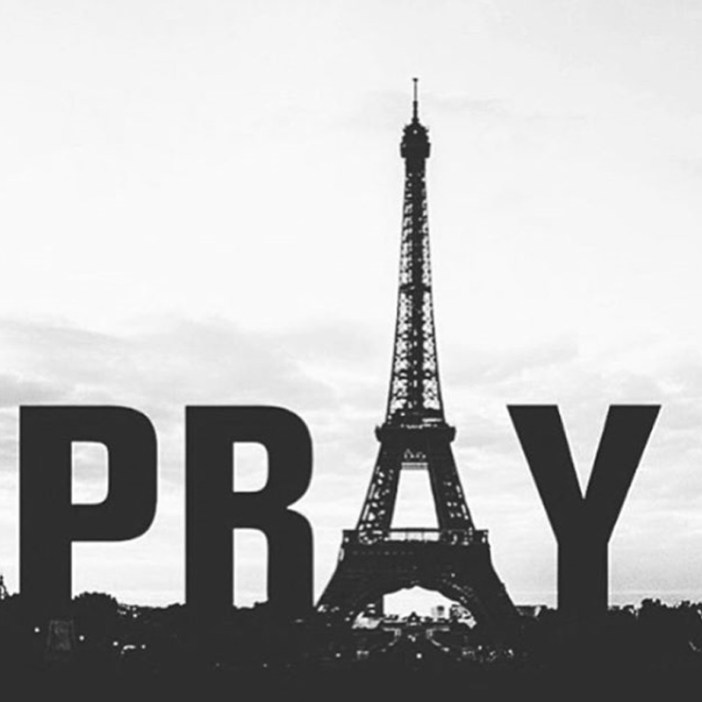
prayforparis

It’s been a somber past few days in light of the terrorist attacks in Paris. When senseless events like this occur, we find ourselves groping about in the darkness, searching for some shred of meaning.

Why did this have to happen?

How could our fellow human beings display such a disregard for human life?

Where was God in the midst of it all?

These are fair questions to be asking, and I don’t believe God begrudges us asking them, even the last one. He’s God, He can take it! While in no way did God have any hand in the tragic events that took place on Friday, I firmly believe that God takes even the most horrific of acts and intends to redefine them for His glory. To quote the Jason Gray song, “In the hands of our Redeemer, nothing is wasted!” So what does God want to teach us through this tragedy? Unlike the biblical prophets, I don’t presume to know precisely what God wants to say at this moment; but as a preacher I am called to proclaim His revealed truth. Since the ultimate way we know God is through His Word, I want to turn to that now in hopes that it can help us as we process Paris.

In doing so, I want to look at scriptures that focus on Jesus’ interaction with 3 of His closest friends and followers: Mary, Martha and Lazarus. We first hear about these siblings when Jesus comes to their village and they invite Him into their home. While Martha is busy acting as a good host to their guest, her sister Mary opts to sit at Jesus’ feet and listen to His teaching. This frustrates Martha who then complains about her sister to Jesus. Jesus’ response to her is, “Martha, Martha, you are anxious and troubled about many things, but one thing is necessary” (Luke 10:41-42b). This text reveals that what truly matters to God is relationship with Him, and yet we too often allow ourselves to get distracted from that. Just before the Paris attacks, which prompted an outpouring of prayers and support on social media (including the changing of Facebook profile pictures to signify solidarity with the Parisians), the hot topic on social media was the Starbucks cup controversy. The unfortunate piece about this chapter in the crusade to “keep Christ in Christmas” is that it will undoubtedly cause Christ to be further rejected by some people. (Now don’t get me wrong, I absolutely want all people to come to the point of making Jesus’ birth their primary focus at Christmastime. But proclaiming that truth is the job of Christians, not Starbucks. So rather than focusing our energy on picking fights with everyone who doesn’t acknowledge Christ during this season, let’s instead redirect that energy toward sharing the hope that we have in Him.) Ok that’s more than enough time spent on that topic, but my point is that Christians can get so distracted with trying to tackle all the potential problems in our world today that we forsake our true calling. As in the case of Martha above, Jesus intends to shift her attention away from the periphery and back to the primary. In a similar way, I believe Christ is using the Paris attacks to reveal what truly matters to Him, and what should matter to those of us who claim His name. Now again, that in no way is meant to suggest that God intended for these attacks to happen. But I do believe that God will work through them to turn our attention away from all the potential distractions in order for us to focus instead on the “one thing” that matters: pointing the world to the Light in the midst of this present darkness.

The second scripture I want to lift up comes later in the story of Jesus’ interaction with these siblings, and it’s found in John 11. Lazarus has become ill and his sisters have sent for Jesus in hopes that He’ll come and heal their brother. But Jesus delays His coming and Lazarus ends up dying. When Jesus does arrive in the village, He’s met by Martha and Mary and not only encounters their grief at the death of their brother, but He also bears the burden of responsibility for Lazarus’ passing, as revealed by them both stating, “Lord, if you had been here, my brother would not have died” (v. 21 & 32). This accusation by these sisters seems to resonate with many in the wake of tragedies, which leads some to surmise that God’s absence is either indicative of His indifference or His nonexistence. As such, Jesus’ response to these sisters continues to be crucial for us today. Verse 35, which is the shortest verse in all of Scripture, is nevertheless one of the most profound. It reads simply, “Jesus wept.” Citing the reason for Jesus shedding tears, it says, “When Jesus saw Mary weeping, and the Jews who had come along with her also weeping, He was deeply moved in spirit and troubled” (John 11:33). Not only was Jesus profoundly present in that moment, but He was also anything but indifferent to their suffering. I believe this verse is crucial for times such as these because it reveals a God who is not indifferent to the loss of human life and the ensuing pain for loved ones. Just as Jesus wept at the death of Lazarus, I have no doubt that He likewise wept at the death of the 129 slain in Paris (and at the death of any of His beloved children). But as this scripture reveals, the tears He shed aren’t solely for Lazarus upon his death, but also for those he left behind. Thus I believe the tears He continues to shed in these moments aren’t solely for the deceased but also for those who mourn their deaths. God is profoundly present in our moments of grief and loss, and just as He wept alongside Mary and Martha, He weeps with you and me as we mourn the deaths of our loved ones.

While the first scripture intends to challenge the distractions that threaten to overshadow Christ, and the second to reveal Christ’s heart amidst tragedies, what remains is to counsel Christians on what our appropriate response should be in the wake of chaos. The common human response at such times is to pray for peace on earth, which obviously is a noble request. However, for those of us who look to the Bible as our guide, we must acknowledge the fact that the Scriptures never promise peace on earth, at least not on this side of Jesus’ return. As such, Christians have a unique word to speak to the world. To discover what that is, we once again turn to John 11 and the exchange between Jesus and Martha. Following Martha’s lamenting the fact that Lazarus died as a result of Jesus’ absence, she nevertheless clings to her faith that her brother will rise again. Then come Jesus’ words, “I am the resurrection and the life. The one who believes in Me will live, even though they die, and whoever lives by believing in me will never die” (v. 25-26).  Jesus is here foreshadowing the victory He will achieve over death once and for all through His death and resurrection. Although death will remain a part of life, it will never have the last word for those who are in Christ Jesus. This is the uniquely glorious message that Christians have the privilege of proclaiming to the world. Unfortunately, too often we fail to do so, either because we’ve allowed ourselves to get distracted by peripheral matters or because we succumb to timidity and assume that the world will not be receptive to our message.

The problem with us failing to share our message is that there’s so much is at stake surrounding our response (or lack thereof) in these moments. Turning back to our passage, John tells us that after Jesus raised Lazarus from the dead, people started flocking to their house, not only to see Jesus but also to see the walking dead. When the chief priests learned about this it says that they plotted to kill Lazarus too because “on account of him many of the Jews were going over to Jesus and believing in Him” (12:11). Although none of us will likely share Lazarus’ experience of being brought back to life, the correlation is that people may come to believe in Jesus (or to reject Him) on account of us. As Christ’s followers it’s now we who bear the burden of responsibility for whether or not others will come to know of life eternal in Jesus Christ. I believe that it’s in the shadow of tragic events such as the attacks in Paris, when people are yearning for answers and hungering for hope, that we have the greatest opportunity to share the good news. The question is will we remain silent, hoping that someone else will step up in our place (perhaps Starbucks), or will we boldly step out into these dark places?

Although the world is seemingly becoming increasingly evil, we know (as I recently heard it said) that “God is on His throne, and Jesus is seated at His right hand.” Rooted in that confidence we’re able to face whatever the devil throws at us. When we find ourselves in times such as these, which seem so void of meaning, let us remember that the Spirit of God is hovering over this present darkness and He intends to use us to shine His glorious Light into it. In the case of the Paris attacks, we may feel as though we’re unable to do much more than declare our solidarity through social media and offer up prayers for the victims and their families, given that we’re separated by an ocean. But let us remember that the greatest weapon we have at our disposal is prayer. While our tendency may be to pray generally for peace on earth, I want to challenge us instead to get really specific by praying that hearts will be turned to Christ Jesus, the Prince of Peace. (Yes, that means especially praying for the hearts of ISIS adherents.) Because it’s only when every knee bows and every tongue confesses that Jesus Christ is Lord that this world will ever know peace in its fullness. And while that likely will not happen until Christ returns, it is our mission nonetheless. And in the meantime, for Christ’s sake, let’s remember that He cares so much more about the hearts of His children than He cares about the cup their coffee is in.

Hindsight is 20/15

IMG_8718

So I recently had LASIK. While this has proven to be one of the best things I’ve ever done, prior to having it I was definitely leery of such a procedure. The idea of mixing lasers with eyeballs just didn’t seem like a good combo. Although it’s been over a decade since LASIK received FDA approval, with thousands of people having undergone the procedure, I thought it possible that some unforeseen side effect (likely blindness) could still occur. Thus, in my mind, it was obviously wise to put off such a procedure until at least two decades had gone by. While this seemed like a sound argument, Marisa apparently didn’t agree as her gift for my last birthday entailed her going behind my back and making arrangements for me to have the procedure. (I’m not sure what it says about a spouse when she signs you up for ocular torture and presents it as a gift?) Although I was still a bit anxious about the procedure, my first consultation with the clinic in the Twin Cities put me totally at ease. The procedure, which was incredibly quick, went off without a hitch, and I’m happy to report that just over seven months later I’m still not blind. (I guess Marisa was right after all!) Reflecting on that experience has caused me to think a lot about sight, which is what I want to unpack in this post.

As you may have noticed, there’s a glaring error in the title of this post. The well-known phrase reads, “hindsight is 20/20,” so why did I tweak that? My reason for doing so relates to my experience with LASIK, which has taught me something important about eyesight. While I used to think that perfect vision was 20/20 (in large part due to this popular phrase), I’ve since learned that 20/20 simply refers to normal vision (i.e. what we should expect from our eyes). It means that what you can see clearly at 20 feet is what most people can see clearly at this distance. So normal, not enhanced, vision. This phrase, however, implies enhanced vision; that we’re able to see things with greater clarity once some time has gone by and we’re a bit more removed from the situation. 20/15 vision, on the other hand, implies better-than-normal vision. It means that you can see at 20 feet what most people can only see at 15 feet. (Following LASIK I now have 20/15 vision and can see with greater clarity than before the procedure. Yes, I’m like a superhero!) Given that hindsight affords us a greater perspective of an experience than we had in the moment, it would seem to make more sense to speak of hindsight as being 20/15.

So why is this important for real life? I’ve been reflecting a lot lately on the recent past in hopes of gleaning some wisdom from my experiences. In doing so, I’ve discovered that hindsight really does improve our perspective on things, as we’re able to see events with enhanced clarity. Experiences that at the time seemed so confusing and without purpose, have since come into focus for me as representing incredible opportunities for learning and growth. Although it can be difficult to see this in the moment, especially when you find yourself in the midst of a storm, God uses these experiences to shape us and reveal our character. Reflecting on the past has provided me with incredible insight in the present as to who I am, and I’m grateful for that. One of the definitions of insight is “a deep understanding of a person or a thing.” While my experiences have definitely provided me with a deeper understanding of myself, more significantly than that is the fact that they’ve provided me with a much deeper understanding of God and His faithfulness. A scripture that’s spoken powerfully into my life is Proverbs 3:5-6, which reads, “Trust in the LORD with all your heart, and lean not on your own understanding. In all your ways acknowledge Him, and He will make straight your paths.” Although not always easy, I’ve tried to cling to these words in the midst of challenging seasons in life, trusting that God will lead me through them. I would encourage you to do the same as His faithfulness extends to you as well.

Thinking a bit more about the insight I’ve gained as of late, I’ve heard it said that we focus the majority of our thoughts either on the past (where we’ve been) or on the future (where we hope to be going), and in the process it’s the present that gets neglected. Obviously that’s a problem as it means that we’re never truly living in the moment. When we think about the past, it can be viewed with either fondness/nostalgia or with shame/regret. In the same way, the future can be viewed with either hope/expectation or with fear/uncertainty. The way in which we view our present reality is typically shaped either by our experiences in the past or by our outlook for the future, if not a combination of the two. While this is unavoidable to some extent, I believe it’s crucial that we do our best to embrace today, rather than staying stuck in the past or fixating on the future, or we’ll always miss the gifts that the present has for us. (I unpacked this thought more in my first post so I’ll simply leave it at that here.) So that’s the past and the present, but what about the future?

Just as my LASIK procedure has caused me to reflect on hindsight and insight, it’s likewise caused me to think about foresight. When we think about foresight we likely associate it with the ability to predict the future. How well has that been working for you? In my experience the future has tended to turn out quite differently than I could have envisioned, so that definition of foresight seems quite unrealistic. However, foresight can also simply mean looking forward, as well as exercising care for the future (such as investing wisely). While reality reveals that we cannot predict the future, we nevertheless can expect that it will come and do our best to prepare for it in the present.

Another word for foresight that’s used in organizations is “vision,” which seems a fitting word on which to focus as I wrap up this post. A definition I came across for an organization’s vision is “its optimal desired future state,” which although not entirely predictable can nevertheless provide a clear direction. I’ve come to believe that vision is key as we look to the future because it helps to clarify where we’re going. If we’re working as part of a team, a vision helps to ensure that everyone keeps tracking in the same direction. I’ve learned in recent years that without a clear (and compelling) vision it won’t take long before people either begin to drift or for competing directions to be lifted up. This will undoubtedly lead to confusion at best (where nobody has any clear idea of where they’re headed) or division at worst (where people get frustrated and walk away). Thus a clear vision is key for any organization, and if the organization of which you’re a part is the Church (as it is for me), then your vision had better be from God; which means your visioning process has to have prayer at its core. Although we may not think of it much, it’s not a bad idea for us as individuals to likewise have visions for ourselves and our families. Now we may not formalize those into actual statements that we post in our houses (although I know that some families do this, which I think is a cool practice), yet they nevertheless can provide direction and guidance for our lives. Whether operating as individuals or as part of an organization, I believe the words of one of my favorite scriptures can provide us with an incredible vision for the future: “For I know the plans I have for you, declares the LORD, plans to prosper you and not to harm you, plans to give you hope and a future” (Jeremiah 29:11). Although the future remains unpredictable for us, we can trust that it’s not unpredictable for God, and that He has a plan for our lives.

Maybe today you’re stuck rehashing the past, whether that be in the form of guilt, shame or regret. Maybe you currently find yourself in a storm and you can’t see a way out. Maybe your outlook for the future is grim, or you’re allowing fear to keep you from doing something that you deep down know will improve your life. Wherever you find yourself, my encouragement is that you ask God to help you begin to see through the eyes of faith.  Hebrews 11:1 speaks of faith as “the assurance of things hoped for, the conviction of things not seen.” While asking God to do this work in you may be scary, it’s time to stop dragging your feet and coming up with irrational fears, and instead allow Him to reshape your life. Rather than continuing to see ourselves through our imperfect eyes as normal, ordinary, or even insignificant, let’s ask God to help us see ourselves as He sees us, as his beloved sons and daughters.

A Detox of Biblical Proportions

detox2

So I’m doing a detox. My sister works for Arbonne and she’s been encouraging Marisa and me to think about doing their particular detox for awhile now. So we decided to give it a go over this past month. We’re in our final week and we’re both feeling great! I’ll admit that I thought this thing was going to be brutal, given how differently I typically eat, but it’s actually proven to be a fairly painless transition for us. Sure, there are things we miss and things we crave, but all in all it’s been easier than expected. I’d say a major factor with that has been the fact that I feel better than I can remember and have lost some much-needed weight.

While I miss the occasional beer or glass of wine, and I miss having bread in one form or another, I knew the most difficult food group of which I’d be depriving myself would be dairy. You see, if you know the Gravrocks you know that ice cream is our 6th food group. Like my parents, Marisa and my freezer is stocked full of various kinds of ice cream at all times (Marisa has acknowledged that she was never a big ice cream eater…that is until she became a Gravrock). So having to deprive myself of that evening indulgence has been rather difficult; yet, surprisingly, not as challenging as I had imagined. This detox has helped me to realize just how much dairy I consume (cheese definitely rivals ice cream in my diet, and I sure do miss my morning cup of creamer with a dash of coffee). Not that dairy is necessarily bad, as I definitely plan to return to eating it in moderation post detox, but it’s probably an issue when your consumption of it necessitates the creation of an additional food group.

As we’re nearing the end of this 30-day detox, I’ve started thinking about what if we were to go even deeper with this whole detox idea? That got me thinking about what the Bible has to say about purging things from our lives, and believe me it says a lot. When I think of a detox guru in the Bible my mind first goes to John the Baptist. After all, he was a very earthy dude who was on a rather strict food regiment of locusts and wild honey. (Unfortunately for John, honey isn’t allowed on the detox, but I’m thinking locusts may be fair game; somehow those were left off the list of foods to include or eliminate.) On a deeper level, John’s message was all about repentance (i.e. turning away from ungodly things and being baptized into God’s Kingdom), so he was absolutely proclaiming a kind of spiritual detox. John was followed by Jesus, who took up John’s message (minus the questionable diet) of proclaiming a spiritual detox. However, Jesus ultimately was the worst detox participant of all time in that He came on the scene free of all toxins (aka sinless), but then rather than remaining toxin-free, He opted instead to take all of our toxins (aka sins) upon Himself which ravaged His body and led to His death. We should be grateful that Jesus was such a detox failure because, as a result, we were all detoxed once and for all through the cross. Be this as it may, toxins remain in our lives; hence the need for regularly engaging in a biblical detox. So in this post I want to focus on a few scriptures that hopefully can help us as we seek to live a healthier faith-life.

While John and Jesus have already been discussed, I want to turn my attention to the Apostle Paul, who I believe is the Bible’s ultimate detox coach. Paul was definitely a bad dude when we first encounter him in the Bible as Saul, as his relationship with those early Jesus-followers absolutely would have been defined as toxic. However, he undergoes a dramatic detox (i.e. conversion), which propels him to the forefront of coaching Christians on how to live out their faith. In order to see that, I want to focus on two particular passages: 1 Corinthians 6: 12-20 and Ephesians 4:17-32. In the 1 Corinthians passage, Paul makes the statement, “Food is meant for the stomach and the stomach for food.” Now I didn’t select this passage simply because Paul talks about food, but rather because of what he says next: “The body is not meant for sexual immorality, but for the Lord, and the Lord for the body.” In other words, just as food is meant to fill the stomach so that we won’t be hungry, our bodies are meant to be set apart for the Lord so that we won’t be ungodly. Just as we’re not to pollute our bodies by eating junk, so too are we not to pollute our bodies by engaging in immoral behavior. While that’s good advice from Paul on the detox front, he really hits his coaching stride in verses 18-20 where he writes, “Flee from sexual immorality. Every other sin a person commits is outside the body, but the sexually immoral person sins against his own body. Or do you not know that your body is a temple of the Holy Spirit within you, whom you have from God? You are not your own, for you were bought with a price. So glorify God in your body.” We often hear people talk about their “body being a temple” in relation to nutrition, exercise, etc., hence why it’s a helpful reminder when it comes to engaging in a detox like the one I’m doing. However, Paul clearly is more concerned here with spiritual health than physical, so this verse takes on much greater weight in that context.

While sexual immorality is absolutely something from which we’re called to detox, that’s obviously not the only toxin which needs to be addressed in our lives. Hence my reason for likewise including the passage from Ephesians. In it, Paul once again uses detox language when he writes, “[You who are in Jesus were taught] to put off your old self, which belongs to your former manner of life and is corrupt through deceitful desires, and to be renewed in the spirit of your minds, and to put on the new self, created after the likeness of God in true righteousness and holiness.” Paul follows that up with a list of behaviors of which we’re called to purge ourselves. He writes, “Let all bitterness and wrath and anger and clamor and slander be put away from you, along with all malice.” If sexual immorality doesn’t apply to our lives, then no doubt we can identify with at least one of the behaviors in this list. (In other words, we’re all in need of a spiritual detox.) A definition of detox reads, “A process or period of time in which one abstains from or rids the body of toxic or unhealthy substances.” As is quite clear from the passages above, Paul is exhorting Jesus-followers to be rid of all toxic or unhealthy behaviors that would keep us from truly following Him. The big difference between what Paul’s teaching and the typical detox is that Paul’s not talking about doing so for just a set period of time (such as 30 days), but rather about a permanent life change. While elements of a detox can absolutely be adopted as permanent behavior, it would not be recommended that one attempt to remain on a detox program indefinitely. Paul, on the other hand, is advising such a permanent transformation, as he writes in 2 Corinthians 5:17, “Therefore, if anyone is in Christ, he is a new creation. The old has passed away; behold, the new has come.”

Given Paul’s rather radical approach, how are we to be successful at a detox of such biblical proportions? As I reflect on my current experience, I’ve learned that a detox consists of both elimination and ingestion. We are to take certain products that help to cleanse the body of toxins, while likewise consuming clean foods that help to nourish the body. If we relate this principle to our faith, I believe we’ve been given two powerful tools for helping us to accomplish these goals: Prayer and Scripture. The former provides us with an outlet for confessing our sins and brokenness to God, which allows us to be continually cleansed from the toxins that would keep us from Him. In my opinion the ultimate biblical example of this type of expression through prayer comes from King David who writes in Psalm 51, “Have mercy on me, O God, according to Your steadfast love; according to Your abundant mercy blot out my transgressions. Wash me thoroughly from my iniquity, and cleanse me from my sin!…Create in me a clean heart, O God, and renew a right spirit within me.” The latter provides us with the spiritual sustenance we require to live as God’s people, both in the present reality of this life and in anticipation of the life to come. Although I facetiously identified Jesus as the worst detox participant ever, it’s His words to Satan amidst His temptation (quoting Deuteronomy 8:3) that provide the ultimate example of the life-giving power of God’s Word: “It is written, ‘Man does not live by bread alone, but by every word that comes from the mouth of the Lord.'”

So as Marisa and I near the end of this detox, will this Gravrock be kissing ice cream goodbye for good? Not a chance! But I do intend to partake in this indulgence in greater moderation. As I consider my faith-life moving forward I do, however, intend to strive for the level of commitment championed by Paul. That Ephesians passage concludes with these words: “Be kind to one another, tenderhearted, forgiving one another, as God in Christ forgave you.” While I may have a sweet tooth for ice cream, what could be sweeter than if we all lived our lives according to these words?!

…and a little child shall lead them

This is a post for parents. Actually, while the first part may resonate the most with those who are parents, this post is for anyone called to the holy enterprise of caring for/engaging with these beautiful little creatures called children. This post is about the ways in which they reveal grace. This post is about how they reveal the character of the Father.

Recently I had an experience that made me feel like an epic failure as a parent (if you’re a parent I’d be willing to bet you’ve been here too). During the bedtime routine for our boys I was tasked with trying to get our eldest, Emmaus, to use the potty; but he refused to go. Now it’s not abnormal for him to get squirrely during this routine, but on this occasion he seemed downright defiant. Given my desire to get through this routine and get the boys down so that Marisa and I could have that brief period at the end of our day when we’re finally able to reintroduce ourselves to each other, I gave in to my frustration and raised my voice with Emmaus. This clearly upset him, and the poor little guy insisted, amidst tears, that he really didn’t have to go (at this point I could tell he had shifted from being defiant to speaking the truth). The disappointment I felt with myself only escalated when Marisa told me that he didn’t want me to come into his room for prayer time because I had yelled at him. (Who knew that such words out of the littlest of mouths could rock you to your core?!) Now this obviously wasn’t my first failing as a parent nor will it be my last, but this one had a profound impact on me. In that moment I was overcome by feelings of shame; but in the moments that followed I was overwhelmed by acts of grace.

The first display of grace came in the form of Marisa’s embrace as I broke down in the kitchen, and in her affirming me as a good father. The second display came moments later when Emmaus, after calling Marisa into his room, emerged with her to tell me he was sorry for not listening and then gave me a hug and a kiss. What a profound act of grace by a three year old! After all, he’s three, so such defiant behavior is to be expected to some extent. But I’m 35, so what was my excuse for getting so frustrated with this precious little boy? Obviously I can point my finger at the fact that I’m an incredibly flawed human being just like everyone else, but I also expect better from myself as a parent. Rather than allowing me to dwell in my shame, God used this as a teachable moment.

You see, this event with my son got me thinking about my relationship with my Heavenly Father. Think about all the times we’ve been defiant toward God. Cursed Him. Denied Him. Rejected Him. Does God raise His voice in these moments? While He’d be more than justified in doing so, instead He chose a different approach and raised His beloved Son on a cross so that we might be forgiven. And that one act accounted for every time that we raise our voices at God and defy Him. The most profound act of grace that the world has, or will, ever known was displayed by the Father through His Son on Calvary. A much smaller act of grace, yet nonetheless profound, was displayed by the Father through my son the other night in our home.

Jesus-and-children

In the Gospels we witness Jesus being incredibly counter-cultural by identifying little children as the prime examples of His Kingdom. This is often attributed to the fact that children are pure and innocent and, by comparison, adults are not. While this is true to some extent, I’m convinced that Jesus’ teaching on children is much more profound. I truly believe that we are born with an innate sense of God, given that we are created in His image, but as we get older we drift further away from God by reasoning Him out of our existence. I have come to believe that for those of us who are people of faith, our adult lives are spent simply attempting to recapture that innate sense of God that we had as children. It seems to me that this is in large part what Jesus is teaching when it comes to what adults can learn from children. Another major lesson we can learn from them when it comes to God’s Kingdom revolves around grace. That’s precisely the lesson Emmaus taught me the other night, and that he and Grayson have made manifest countless times before and since then. Even when I totally blow it as a parent and feel like I’ve somehow scarred them for life, they give to me the most amazing gifts of grace. Their little arms embrace me in a hug. Their little lips press against mine in a kiss. Their little voices speak words of love and bestow on me the most incredible title of “daddy.” If my children are so quick to extend such love and grace to me, a flawed father, then why do I withhold my full love and gratitude from my flawless Father?

I said at the outset that this post is for parents or those who regularly care for/engage with children, but really this post is for everyone since we all engage with children on some level. Rather than always seeing ourselves as superior to children and attempting to lead them, what if we were to pay attention to all the ways that they can lead us, particularly when it comes to faith? Obviously Jesus felt it worth His time to disrupt His dealings with adults in order to hang out with children, and in doing so He gave us a glimpse of His Kingdom. Perhaps it’s likewise worth our time to pay attention to the children among us because God has so much that He wants to teach us about Him through them.

Waiting sucks!

As my rather blunt title suggests, this first post is about waiting…or rather, my difficulties with waiting. When I think about the major events in my life, and more specifically the waiting process that preceded those events, I have to admit that I’ve done a poor job of being patient. Rather than trusting God with these things, I did my darndest to hold tight to the reins. I’d talk a lot about trusting God during those seasons, but in reality I never fully relinquished control to Him (that’s hard for me to admit as a pastor). Now I wish I could speak of this propensity for impatience solely in the past tense, but unfortunately this continues to reign in my life. I can admit this without hesitation because I’m currently in yet another season of waiting, and I’m finding myself repeating the same pattern. Perhaps you’ve been there. Perhaps you’re still there.

Maybe you’re between jobs and waiting for that right opportunity to come along. Maybe you’re residing in that lovely land of buying/selling a house, and you’re waiting as all of the pieces fall into place on both sides. Maybe you’ve confessed your love to another and you’re waiting for a response. Maybe you’re going through a divorce and you’re just waiting for it to be over. Maybe you’re in a relationship that has taken an abusive turn, and you’re waiting for the right time to walk away. Maybe you’re waiting for your kids to move through their current phase of sleep training, teething, tantrums or properly using a toilet. Wherever you find yourself, it’s likely that there’s some element of waiting operating in your life. While waiting is an unavoidable part of life, and one over which we often have no control, we do have control over how we wait. And that’s what I wanna dial into.

A scripture that’s recently come to mind for me is Psalm 118:24 which reads, “This is the day the LORD has made; let us rejoice and be glad in it.” While I’d imagine this is a familiar scripture to many (maybe you’re finding yourself humming the Sunday School song based on this verse), how many of us truly embrace this reality? I don’t know about you, but if I’m honest I’ve gotta admit that I really struggle with this. Rather than rejoicing and being glad in today, I’m more focused on being worried, anxious or, perhaps even, excited about tomorrow. Now while I don’t believe there’s anything wrong with thinking and dreaming about the future, that’s really not where God wants our thoughts to be focused because that’s His domain. In Matthew 6:34 Jesus says, “Therefore do not worry about tomorrow, for tomorrow will worry about itself. Each day has enough trouble of its own.” At first glance these seem like rather pessimistic words from Jesus, but I believe He’s simply making the point that we’ve got enough to deal with today that we shouldn’t be focused on worrying about tomorrow. God’s got that! (I’d say the same applies when we’re constantly focused on our yesterdays, particularly on rehashing our past mistakes…God’s grace has that covered.) The key to this passage in Matthew’s Gospel is what comes immediately before verse 34, where Jesus says that worry exists for all people, regardless of whether or not they have a relationship with God. But for those of us who are seeking after God, we should trust that He already knows what we need (better than we do actually), so why spend all our time and energy worrying about such things? Instead, Jesus says we should focus all of today’s energy on “seeking first His kingdom and His righteousness,”and then we can simply trust God with the rest. While I absolutely believe this to be true in theory, when it comes to reality I wanna say “easier said than done” and go right on worrying about yesterday or tomorrow while neglecting today.

While this remains a real struggle for me, I wanna share a very recent event that has helped me to recognize why Jesus’ words are truth. This week my oldest son, Emmaus, went off to his first day of school (granted it’s only 3K, but when it’s your first time sending your kid off it’s a big deal, ok!)

IMG_6610

As you can see he was so excited for school, which is huge given that he’s a pretty shy kid. Clearly this was a big deal in his little world. Now the reality is that this major milestone for our son took place in the midst of my worrying about tomorrow, as Marisa and I are currently in a season of waiting to see what God has in store for us with my ministry. What hit me on Emmaus’ big day was that while I’m impatiently waiting for the future I run the risk of missing what God has in store for me today. Am I eager for this season of waiting to be over so I can begin the calling that God has for me? Absolutely! But I’m definitely not eager for Emmaus (or Grayson) to grow up too quickly and have their first days of middle school, high school or college (3K was tough enough). I realize that’ll happen quickly enough without me trying to speed up time in order for the other aspects of my future to begin. If I want to savor these preciously fleeting moments when my boys are little then I also have to learn to embrace this season of waiting and all the ways that God intends to grow me through it.

So after writing this post have I changed my tune about waiting? Nope, it still sucks! But, as has been the case a lot lately, God is teaching me so much through my boys. My eldest going off to his first day of 3K has helped to drive home those scriptures for me. Today is a gift from God because we might not have a tomorrow, so we’ve gotta rejoice and be glad in it. And although I’m eager to see what God has in store for my family’s future, my worrying about or trying to control tomorrow won’t bring about God’s plans any sooner; in fact, it may bring about my plans instead of God’s. The best thing we can do today is to seek to align ourselves with God’s heart, while savoring all that this day has to offer (particularly the precious people in our lives), and then trust that He’ll take care of tomorrow.

So, with that, we wait…